Ferry serviceView schedule and service updates

Read the landscape

History & heritage

Amherst Island’s past remains visible in its names, fields, stone walls, ferry routes, churches, stores, schools, and family histories.

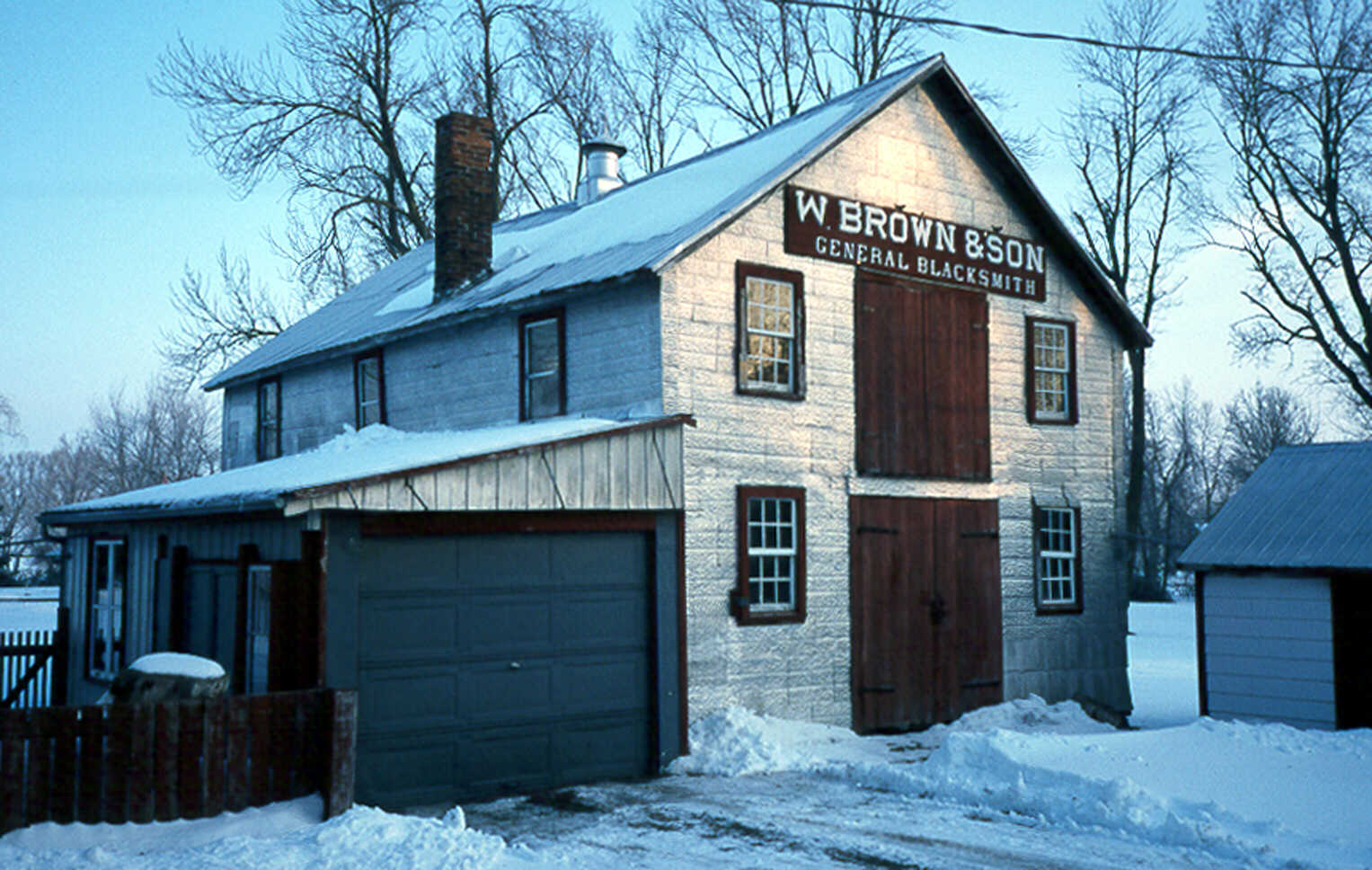
The historic W. Brown and Son blacksmith shop in winter

A concise island history

The island through time

Amherst Island’s written record becomes much fuller with European mapping, colonial land grants, and nineteenth-century settlement. What survives from earlier periods is less complete, and much of the island’s Indigenous history remains to be more fully researched and understood.

The Neilson Store Museum and Cultural Centre preserves maps, artifacts, oral histories, and local research that illuminate much of the island’s later history.

Land and Indigenous history

A longer history of the land

We acknowledge that Amherst Island is part of the ancestral lands of the Haudenosaunee, Michi Saagiig, and Omámíwinini Peoples, whose presence and stewardship continue today.

The shores of Loyalist Township have long been places of gathering, commerce, and peaceful negotiation. These lands are recognized in the Two Row Wampum, the Dish with One Spoon Treaty, Treaty 27, and the Crawford Purchase.

Local histories record the name Ka8enesgo, often translated as “big, long island,” but the origin and historical documentation of that name have not yet been firmly established in the sources available to us. The surviving island-specific record is incomplete. This page therefore does not attempt to present a definitive account of Indigenous life on Amherst Island; it recognizes both what has been recorded and how much remains to be learned.

Read Loyalist Township’s land acknowledgement
01

17th–18th centuries

European mapping and a colonial name

French maps called the island Isle Tonti, after Henri de Tonty. In 1788 the Crown granted it to Sir John Johnson. Lieutenant-Governor John Graves Simcoe renamed it Amherst Island in 1792 for Jeffery Amherst, a British military commander; the name is part of the region’s colonial history.
02

1820s–1850s

Irish settlement and tenant farming

Families from the Ards Peninsula in County Down began arriving in the 1820s. After the Earl of Mount Cashell acquired the island estate in 1835, immigration increased through the 1830s and 1840s. By 1841 the island had more than 1,000 residents and three schools.

03

Mid-19th century

Grain, fishing, sailing, and shipbuilding

Island households worked across a mixed economy: growing wheat and barley, fishing in the Bay of Quinte, sailing the Great Lakes, and building ships at David Tait’s yard. As forests were depleted and rail displaced water transport, mixed and dairy farming became more important.

04

Late 19th–20th centuries

Farms, stores, churches, and community institutions

Tenant families became landowners and expanded farms. Cheese-making, agricultural societies, churches, schools, blacksmithing, and the Neilson Store helped structure island life. Sheep, cattle, hay, pasture, and the ferry continued to shape the working landscape.

05

Into the present

History that lives on

The old store is now a museum, the blacksmith shop and churches remain landmarks, and historic walls still divide working fields. The island’s history also lives on in roads, shorelines, family histories, annual traditions, and community organizations.

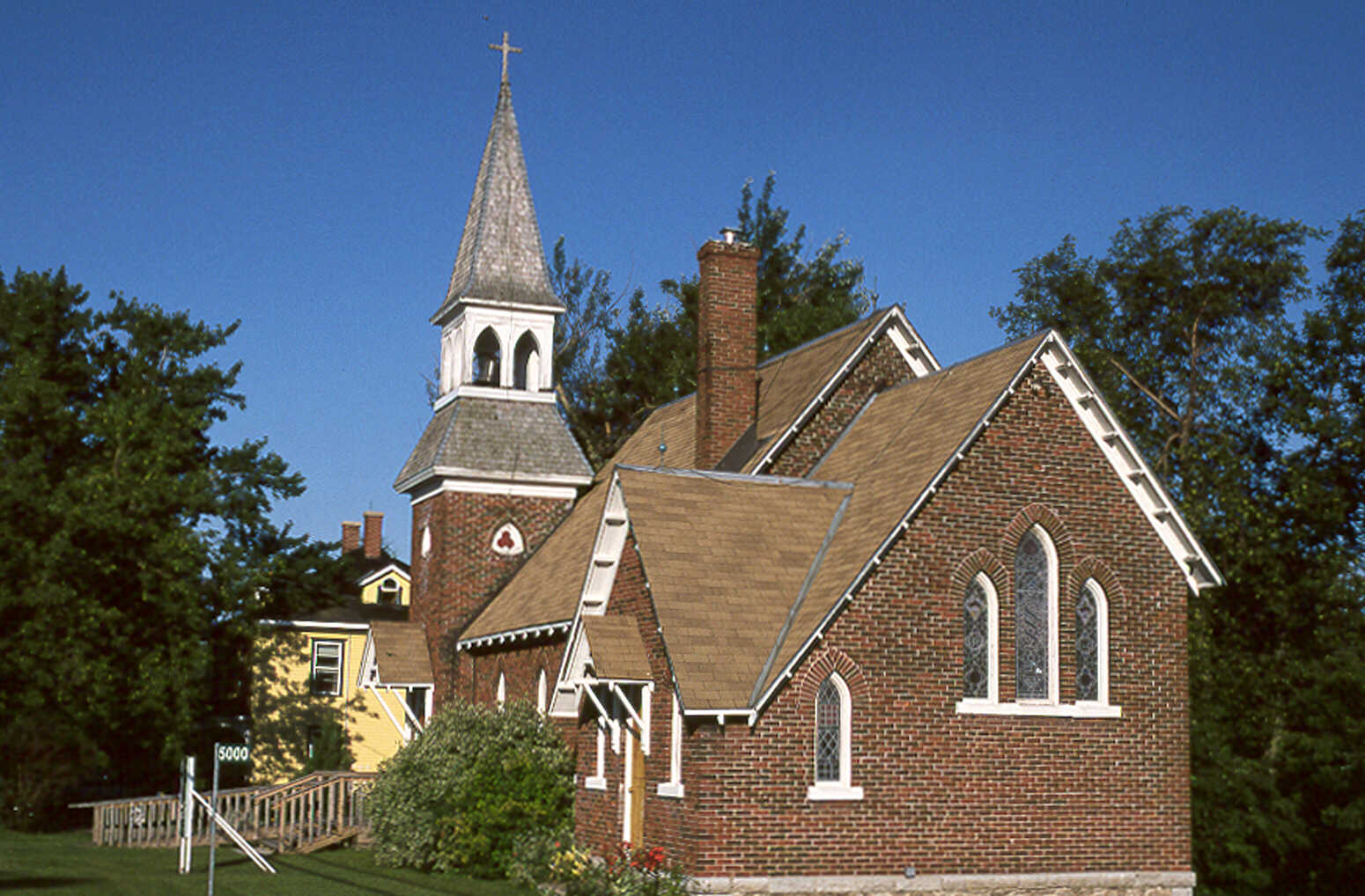
St. Alban’s Anglican Church in Stella during summer

Built heritage

Historic buildings, still part of island life

St. Alban’s and St. Paul’s remain active places of worship as well as historic landmarks. The W. Brown and Son blacksmith shop recalls a trade once essential to every working farm. The Neilson Store, built around 1883, served island households and Great Lakes commerce for nearly a century before becoming the community museum.

Visit the Neilson Store Museum

Stone by stone

The island’s Irish walls

Amherst Island holds an exceptional concentration of historic dry stone walls, closely associated with settlers from the Ards Peninsula.

Built without mortar from stone cleared from the land, the walls divided farms and fields while carrying familiar building traditions into a new landscape. They remain working boundaries, historic artifacts, wildlife habitat, and one of the island’s most recognizable features.

Admire walls from public roads or with the owner’s permission. Do not climb, move stones, or cross onto private land for a closer photograph.